There is a difference between taking responsibility for a mistake and turning that mistake into an identity.
And that difference matters.
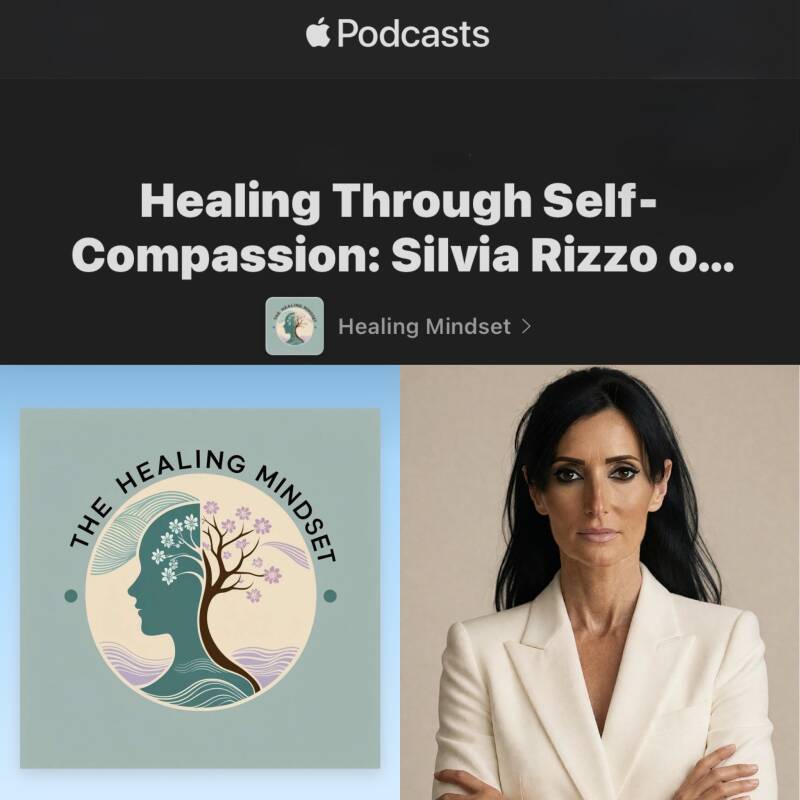
In this conversation on Healing Mindset, we moved into an area that I find particularly interesting: self-compassion.
Not the comfortable version of self-compassion where everything is forgiven, explained away, or softened. But the much more demanding version—the one that allows you to look directly at what happened, admit when you were wrong, learn from it, and still refuse to define yourself by one bad decision.
Self-Compassion Is Not Self-Protection
One of the distinctions we explored was between compassion and ego protection.
Protecting the ego often requires a story.
An excuse. Someone else to blame. A reason why the mistake wasn’t really ours.
Real self-compassion doesn’t need any of that.
It allows us to say:
I made the mistake. I am responsible for it. Now, what can I learn from it?
That is a much stronger position than trying to protect an image of ourselves that was never going to be perfect in the first place.
A Mistake Is Something You Did. It Is Not Who You Are.
This may sound like a small distinction. It isn’t.
When people confuse an action with their identity, mistakes become threatening. And when a mistake threatens who we believe we are, we become much more likely to defend, deny, justify, or hide it.
But if a mistake is information, we can use it.
We can analyse it.
We can change something.
And then we can move.
That is where responsibility becomes useful instead of destructive.
Can Self-Criticism Actually Be Healthy?
We also challenged another popular idea: that self-criticism is always negative.
I don’t believe it is.
There is a huge difference between destroying yourself and being demanding with yourself.
Sometimes looking at your own behaviour and saying, “That wasn’t good enough” is exactly what creates improvement.
The question is what happens next.
Does criticism become punishment?
Or does it become information?
For me, that distinction changes everything.
The Structure You Carry With You
When certainty disappears, the mind loves filling the empty spaces—with fear, assumptions and scenarios that haven’t happened.
That is precisely when an internal structure becomes important.
Your values. Your principles. Your experiences. The lessons you have already earned.
You may not know exactly what will happen next.
But you can still know who you want to be while it happens.
And perhaps that is one of the strongest forms of self-compassion there is: not protecting yourself from reality, but trusting yourself enough to face it.
Host Feedback ✨✨✨✨✨
"Silvia brings a refreshingly honest perspective on leadership, performance, and decision-making when the pressure is real. The blend of high-performance sport and business experience promises a natural, thoughtful conversation filled with practical insight rather than polished soundbites."
What I appreciated most was the reference to “practical insight rather than polished soundbites.”
Because that is exactly what I want these conversations to be.
Not perfect answers.
Useful ones.
Add comment
Comments